Herbs & Healing: From Plant to Practice
This post is a class syllabus and progress tracker for part of my “adult-school” curriculum. Overview here.
Subject: Botany & Traditional Medicine
Course Title: Herbs & Healing: From Plant to Practice
Dates: Monday January 19th, 2026 to Friday May 8th, 2026
Learning Objective: Study the use of 100 common medicinal herbs and learn preparation techniques such as teas, tinctures, salves, and oils.
Requirements for A+ Grade:
Visit 2 Herbal Shops (Drugstore Van der Pigge and Art of Tea)
Take notes on the presentation, storage, smells, staff expertise, packaging, differences between herbs,
Conversation starters with staff:
Which herbs do they suggest for me?
Which herbs are locally grown vs. imported?
Do they have blends or formulas unique to their shop?
Purchase a small amount of 3–5 herbs that resonate
Research, Study and Media Consumption
Read and utilize Buchman’s book Herbal Medicine: The Natural Way To Get Well and Stay Well
Create flashcards of herbs, methods, how they’re used, common ailments and specific preparations
Weeks 1-3: Key Terms For Herbal Medicine
Weeks 4-6: Foundational Allies
Weeks 7-9: Immune & Protective Allies
Weeks 10-12: Hormonal, Circulatory & Adaptogenic Allies
Weeks 13-15: Dream, Spiritual & Energetics Allies
Week 16: Complete Capstone and Final Exam
Practice
Receive Pregnancy Acupuncture / Acupressure Treatment with Herbalist at Green Alchemy in Amsterdam
Acupuncture and herbalism are two pillars of Traditional Chinese Medicine. Both aim to balance the body’s energy (Qi), support organ systems, and restore harmony. Experiencing acupuncture can deepen understanding of how herbs affect the body energetically and physiologically.
Capstone Project
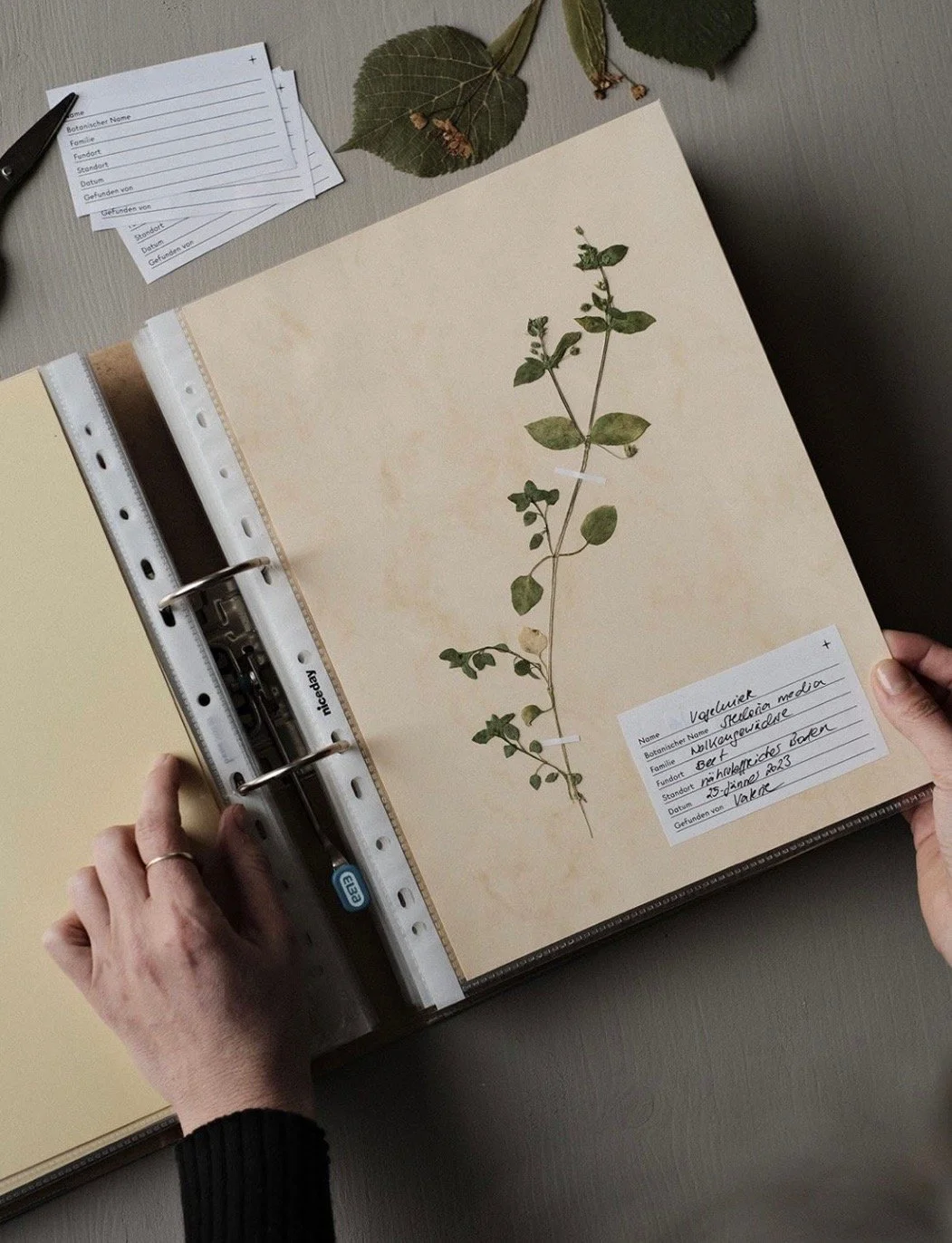
Herbalism Field-Guide Scrapbook of 10 Favorite Herbs
Have fun and be creative. Junk journal vibes.
Final Exam
Test in December
$300 Grant:
Book - Herbal Medicine by Dian Buchman $10
Free Resource: Frolic & Fare (link here)
100 Blank Flashcards $5
Ayuverda Lifestyle Workshop in Amsterdam $40

Site Visit To 2 Herbal Shops on October 11th
Drugstore Van der Pigge: This was a really cool experience! It’s been in the same location for 178 years. The girl working was a 6th generation family member. She was proud to share about the business and incredibly helpful. We purchased raspberry leaf tea for weeks 37-40 of my pregnancy, as it’s said to help strengthen the uterus which helps reduce the length of labor, making it easier and less painful. Drinking raspberry leaf tea after delivery can aid in uterine recovery. We also got two essential oils - eucalyptus and a “harmony blend.” My favorite aspect of the shop was the glass storage jars and the wood box storage bins. You could tell they really care about the quality, ingredients and process. It also smelled incredible. I will definitely be back.
Art of Tea: This store’s aesthetic was much more modern but it was still really cool because they had the biggest selection I’ve ever seen in my life. They had tins floor to ceiling and wall to wall filled with every tea, herb, spice and blend that you could imagine. My favorite part was that they had a little test jar that magnetized to each tin so you could really see and smell the products up close. I think Clay and I both smelled at least 25, which was really fun. We each picked out one tea. I got a winter blend of apple, grapes, cinnamon, pears, orange, chamomile blossom, safflower blossom, carob and almond. Their website described it as “A gentle blend with a very creamy apple-almond aroma. It has a bright yellow finish. A warm treat for fruit tea lovers.” Clay got African Tiger Rooibos, which is good for relaxation as it is naturally caffeine-free, and contains calcium and magnesium. We both enjoyed a cup Sunday evening and they were delightful! I’d like to get in the habit of having tea more frequently this winter.
Capstone Project: Herbalism Field-Guide Scrapbook
Include at least 10 favorite herbs from semester
Junk journal / scrapbook (handwritten, illustrated, tactile)
Add dried samples, labels, receipts, pressed leaf stamps, sketches, magazine cutouts, watercolor splashes, etc
Optional information to include on each herb:
botanical name + common names
native to / habitat
symbolism / folklore
cautions / contraindications
usable parts (leaves, roots, flowers, seeds)
preparation & taste profile (tea, tincture, salve)
taste profile (warming, cooling, drying, moistening)
the main herbal tastes: bitter, sweet, sour, salty, pungent / spicy, astringent, umami
aroma / sensory notes (earthy, bright, floral, sharp, spicy…)
medicinal uses (digestion, skin, respiratory, etc.)
spiritual / ritual uses (dreamwork, protection, cleansing, etc.)
personal notes (reflections, where you sourced it, how it made you feel, why you feel drawn to it)
Weeks 1 to 3: Key Terms For Herbal Medicine
Herbalism
The study and practice of using plants for medicinal, culinary, or spiritual purposes
Encompasses preparation methods, identification, and therapeutic use of herbs
Also called phytotherapy
Tincture
A concentrated liquid extract of herbs, usually made with alcohol, glycerin, or vinegar.
Used for potent, long-lasting remedies.
Typically taken in drops under the tongue or diluted in water.
Tea / Infusion / Decoction
Infusion: Steeping leaves, flowers, or soft plant parts in hot water.
Decoction: Boiling harder plant parts (roots, bark, seeds) to extract medicinal properties.
Easy, gentle way to consume herbs for daily use.
Salve / Ointment
Herb-infused fat or oil used topically on skin.
Provides healing, soothing, or protective effects.
Often includes beeswax for consistency.
Herbal Oil / Infused Oil
Oil (like olive, coconut, or jojoba) infused with herbs to capture their medicinal and aromatic properties.
Can be used topically, in massage, or as a base for salves.
Poultice / Compress
Fresh or dried herbs applied directly to the skin, often wrapped in cloth.
Used for inflammation, pain relief, or drawing out infections.
Capsule / Pill
Dried, powdered herbs encapsulated for easy consumption.
Good for precise dosing and convenience.
Syrup
Sweet, liquid herbal preparation, often with honey or sugar.
Commonly used for coughs, sore throats, or children’s remedies.
Infused Vinegar
Vinegar infused with herbs for medicinal or culinary use.
Can be used topically or internally (diluted) for circulation, digestion, or preservation.
Adaptogen
Herbs that support the body’s resilience to stress.
Help balance hormones, energy, and immunity.
Examples: Ashwagandha, Eleuthero, Rhodiola.
Nervine
Herbs that support the nervous system.
Can be relaxing or tonifying.
Examples: Lemon Balm, Valerian, Blue Vervain.
Diaphoretic
Herbs that promote sweating.
Used to help break fevers or detoxify the body.
Example: Elderflower
Lymphatic Herb
Supports healthy lymph drainage and immune function.
Often detoxifying or cleansing.
Example: Calendula, Red Clover.
Hepatic / Liver Herb
Herbs that support liver function and detoxification.
Examples: Milk Thistle, Dandelion Root, Barberry.
Emmenagogue
Herbs that stimulate or regulate menstrual flow.
Example: Yarrow, Mugwort, Dong Quai.
Infusion vs. Maceration
Infusion: Hot water extraction.
Maceration: Cold or room-temperature extraction, often in oil or alcohol.



Weeks 4 to 6: Foundational Allies (28 Herbs)
Aloe Vera – Aloe barbadensis
Taste: Bitter (gel or inner leaf)
Medicinal: Skin healing, digestive aid, anti-inflammatory
Spiritual: Purification, protection, vitality
Native: Arabian Peninsula, North Africa
Anise – Pimpinella anisum
Taste: Sweet, licorice-like
Medicinal: Digestive aid, carminative, relieves bloating and gas
Spiritual: Clarity, protection, attraction
Native: Mediterranean, Southwest Asia
Basil Sweet – Ocimum basilicum
Taste: Sweet, slightly spicy
Medicinal: Digestive support, mild anti-inflammatory
Spiritual: Love, protection
Native: India, Mediterranean
Bay Laurel – Laurus nobilis
Taste: Pungent, herbal
Medicinal: Digestive, circulatory support
Spiritual: Victory, protection
Native: Mediterranean
Calendula – Calendula officinalis
Taste: Mildly bitter, resinous
Medicinal: Skin healing, lymph mover, antifungal
Symbolism: Sunshine, renewal
Caraway – Carum carvi
Taste: Warm, slightly sweet, earthy
Medicinal: Digestive support, carminative, relieves bloating and indigestion
Spiritual: Protection, abundance, clarity
Native: Europe, Western Asia
Cardamom – Elettaria cardamomum
Taste: Sweet, aromatic, slightly spicy
Medicinal: Digestive aid, respiratory support
Spiritual: Clarity, joy
Chamomile – Matricaria recutita
Taste: Sweet, apple-like, slightly bitter
Medicinal: Calms anxiety, aids sleep, soothes digestion
Caution: Ragweed allergy
Symbolism: Peace, patience, sun energy
Cinnamon – Cinnamomum verum
Taste: Sweet, warming
Medicinal: Circulation, digestive support
Spiritual: Vitality, abundance
Clove – Syzygium aromaticum
Taste: Pungent, warm
Medicinal: Antimicrobial, digestive support
Spiritual: Protection, courage
Coriander / Cilantro – Coriandrum sativum
Taste: Citrusy, fresh
Medicinal: Digestive aid, antioxidant
Spiritual: Purification
Native: Mediterranean
Dandelion – Taraxacum officinale
Taste: Bitter, earthy (Leaf) / Bitter, nutty (Root)
Medicinal: Liver support, digestive aid
Spiritual: Resilience, grounding, vitality
Fennel – Foeniculum vulgare
Taste: Sweet, anise-like
Medicinal: Digestive aid, relieves gas, supports lactation
Symbolism: Courage, longevity
Native: Mediterranean
Ginger – Zingiber officinale
Taste: Hot, pungent, warming
Medicinal: Nausea relief, circulation booster, anti-inflammatory
Caution: May thin blood
Symbolism: Courage, passion
Hibiscus – Hibiscus sabdariffa
Taste: Tart, floral
Medicinal: Circulation, blood pressure support
Spiritual: Vitality, love
Lavender – Lavandula angustifolia
Aroma: Floral, calming, slightly woody
Medicinal: Nervine relaxant, sleep aid, skin healing
Spiritual: Purification, protection
Native: Mediterranean
Lemongrass – Cymbopogon citratus
Taste: Citrusy, slightly bitter
Medicinal: Digestive aid, calming, anti-inflammatory
Symbolism: Clarity, purification
Native: Tropical Asia
Lemon Verbena – Aloysia citrodora
Taste: Citrus, sweet
Medicinal: Relaxing, digestive aid
Spiritual: Happiness, clarity
Native: South America
Mint Spearmint – Mentha spicata
Taste: Sweet, refreshing
Medicinal: Digestive aid, soothing
Spiritual: Clarity, renewal
Native: Europe, Asia
Nettle – Urtica dioica
Taste: Mineral-rich, grassy
Medicinal: Iron-rich tonic, allergy relief, joint support
Caution: Stings when fresh
Spiritual: Strength, protection
Oregano – Origanum vulgare
Taste: Pungent, slightly bitter
Medicinal: Antimicrobial, immune support
Spiritual: Protection, courage
Native: Mediterranean
Parsley – Petroselinum crispum
Taste: Fresh, slightly bitter
Medicinal: Kidney support, diuretic, vitamin-rich
Symbolism: Joy, festivity
Native: Mediterranean
Peppermint – Mentha × piperita
Taste: Cooling, pungent, aromatic
Medicinal: Relieves nausea, clears sinuses, eases headaches
Caution: Not for infants or reflux
Symbolism: Clarity, invigoration
Rosemary – Salvia rosmarinus
Aroma: Pine-like, resinous
Medicinal: Improves memory, circulation, digestion
Spiritual: Remembrance, protection
Native: Mediterranean
Sage – Salvia officinalis
Taste: Bitter, astringent, savory
Medicinal: Antimicrobial, supports throat health
Spiritual: Wisdom, cleansing
Caution: Avoid excess in pregnancy
Thistle (Milk Thistle) – Silybum marianum
Taste: Bitter
Medicinal: Liver support, detoxification
Spiritual: Protection, cleansing
Thyme – Thymus vulgaris
Taste: Pungent, earthy
Medicinal: Antimicrobial, respiratory support
Spiritual: Courage, protection
Native: Mediterranean
Turmeric – Curcuma longa
Taste: Earthy, slightly bitter, warm
Medicinal: Anti-inflammatory, liver support, immune booster
Spiritual: Purification, vitality, protection
Native: South Asia


Weeks 7 to 9: Immune & Protective Allies (23 Herbs)
Astragalus Root – Astragalus membranaceus
Taste: Sweet, mild
Medicinal: Immune tonic, adaptogen, vitality
Spiritual: Longevity, protection
Barberry – Berberis vulgaris
Taste: Sour, bitter
Medicinal: Liver support, antimicrobial, digestive aid
Symbolism: Protection, courage
Blueberry Leaf – Vaccinium myrtillus
Taste: Mild, slightly astringent
Medicinal: Supports blood sugar, mild antioxidant
Symbolism: Health, protection
Cat’s Claw – Uncaria tomentosa
Taste: Bitter, woody
Medicinal: Immune support, anti-inflammatory
Spiritual: Protection, vitality
Chaga Mushroom – Inonotus obliquus
Taste: Earthy, slightly bitter
Medicinal: Antioxidant, immune support
Symbolism: Strength, resilience
Cordyceps – Cordyceps sinensis
Taste: Mild, earthy
Medicinal: Energy, respiratory support, stamina
Spiritual: Vitality, endurance
Echinacea – Echinacea purpurea
Taste: Tingling, slightly bitter, earthy
Medicinal: Immune stimulant, cold prevention
Caution: Avoid with autoimmune flares
Symbolism: Strength, resilience
Elder (Berries & Flowers) – Sambucus nigra
Taste: Tart, fruity (berries); Sweet, floral (flowers)
Medicinal: Immune booster, antiviral, cold/flu support
Caution: Raw berries can be toxic
Symbolism: Protection, longevity, purity, joy
Eleuthero / Siberian Ginseng – Eleutherococcus senticosus
Taste: Bitter, earthy
Medicinal: Adaptogen, energy, immune support
Symbolism: Resilience, endurance
Garlic – Allium sativum
Taste: Pungent, spicy
Medicinal: Antimicrobial, immune booster, circulatory support
Symbolism: Protection, vitality
Caution: Blood thinning
Hawthorn Berry – Crataegus monogyna
Taste: Tart, earthy
Medicinal: Circulatory tonic, heart support
Spiritual: Love, protection
Licorice Root – Glycyrrhiza glabra
Taste: Sweet, earthy
Medicinal: Throat, adrenal support, harmonizes formulas
Caution: Hypertension
Symbolism: Harmony
Lobelia – Lobelia inflata
Taste: Pungent, slightly bitter
Medicinal: Respiratory support, relaxant
Caution: Small doses only
Spiritual: Courage, release
Marshmallow Root – Althaea officinalis
Taste: Sweet, mucilaginous
Medicinal: Soothes mucous membranes, digestive and respiratory support
Symbolism: Comfort, nurturing
Neem – Azadirachta indica
Taste: Bitter, astringent
Medicinal: Antimicrobial, immune support, detoxification, skin health
Caution: Avoid excessive use during pregnancy
Spiritual: Purification, protection, cleansing
Native: India
Osha Root – Ligusticum porteri
Taste: Spicy, pungent, bitter
Medicinal: Respiratory support, immune booster
Spiritual: Protection, vitality
Pine Needles – Pinus spp.
Taste: Piney, resinous
Medicinal: Immune support, respiratory aid
Spiritual: Cleansing, protection
Reishi Mushroom – Ganoderma lucidum
Taste: Bitter, woody
Medicinal: Immune modulation, stress support
Symbolism: Longevity, spiritual grounding
Schisandra – Schisandra chinensis
Taste: Sour, bitter, sweet, salty, pungent (five flavors)
Medicinal: Liver support, adaptogen, energy
Spiritual: Balance, endurance
Slippery Elm – Ulmus rubra
Taste: Mild, mucilaginous
Medicinal: Soothes throat, digestive lining
Symbolism: Protection, comfort
Tulsi / Holy Basil – Ocimum tenuiflorum
Aroma: Sweet, clove-like, peppery
Medicinal: Adaptogen, stress reducer, respiratory support
Symbolism: Sacredness, devotion
Uva Ursi – Arctostaphylos uva-ursi
Taste: Bitter, slightly astringent
Medicinal: Urinary tract support, diuretic, antimicrobial
Caution: Not for long-term use; avoid during pregnancy
Spiritual: Cleansing, protection, grounding
Native: Northern Hemisphere
Yarrow – Achillea millefolium
Taste: Bitter, aromatic, astringent
Medicinal: Wound healing, menstrual support, fever reducer
Symbolism: Courage, boundaries
Native: Northern Hemisphere


Weeks 10 to 12: Hormonal, Circulatory & Adaptogenic (19 Herbs)
Alfalfa – Medicago sativa
Taste: Mild, grassy
Medicinal: Nutrient dense, hormone support
Symbolism: Abundance, vitality
Ashwagandha – Withania somnifera
Taste: Bitter, earthy
Medicinal: Adaptogen, stress reduction, hormonal support
Spiritual: Vitality, grounding
Black Cohosh – Actaea racemosa
Taste: Bitter, earthy
Medicinal: Menopausal support, uterine tonic
Caution: Liver issues, pregnancy
Symbolism: Feminine strength
Black Walnut – Juglans nigra
Taste: Bitter, nutty
Medicinal: Circulation, parasite support, antimicrobial
Spiritual: Protection, grounding
Cayenne / Chili Pepper – Capsicum annuum
Taste: Spicy, hot
Medicinal: Circulation, metabolism stimulant, pain relief topically
Spiritual: Energy, transformation
Chasteberry (Vitex) – Vitex agnus-castus
Taste: Bitter, fruity
Medicinal: Hormonal support, PMS regulation
Caution: Avoid in pregnancy or hormone therapy
Symbolism: Clarity, focus
Dong Quai – Angelica sinensis
Taste: Sweet, earthy
Medicinal: Female reproductive support, blood tonic
Caution: Pregnancy & anticoagulant use
Spiritual: Balance, fertility
Fenugreek – Trigonella foenum-graecum
Taste: Bitter, nutty
Medicinal: Hormone support, lactation aid
Caution: May lower blood sugar
Spiritual: Fertility, abundance
Ginkgo Biloba – Ginkgo biloba
Taste: Bitter, woody
Medicinal: Circulatory support, memory, brain function
Spiritual: Longevity, clarity
Ginseng (Asian) – Panax ginseng
Taste: Bitter, earthy
Medicinal: Adaptogen, circulation, stamina
Symbolism: Strength, endurance
Lion’s Mane – Hericium erinaceus
Taste: Mild, slightly sweet, earthy
Medicinal: Cognitive support, nerve regeneration, focus, adaptogen
Spiritual: Mental clarity, insight, intuition
Native: Temperate forests (Asia, North America, Europe)
Maca Root – Lepidium meyenii
Taste: Nutty, earthy
Medicinal: Hormonal support, energy, libido
Symbolism: Vitality, endurance
Motherwort – Leonurus cardiaca
Taste: Bitter, herbal
Medicinal: Female reproductive tonic, PMS support, circulation support
Spiritual: Courage, heart-centered strength, nurturing
Caution: Avoid in pregnancy unless guided; may affect blood pressure
Oat Straw – Avena sativa
Taste: Sweet, grassy
Medicinal: Nervine tonic, hormonal balance, mood support
Symbolism: Growth, resilience
Red Clover – Trifolium pratense
Taste: Mild, sweet, grassy
Medicinal: Menopausal support, circulation, skin health
Symbolism: Renewal, balance
Caution: Avoid in hormone-sensitive conditions
Red Raspberry Leaf – Rubus idaeus
Taste: Mild, grassy, slightly astringent
Medicinal: Uterine tonic, pregnancy support, menstrual health
Symbolism: Fertility, protection
Rhodiola – Rhodiola rosea
Taste: Bitter, slightly astringent, earthy
Medicinal: Adaptogen, stress reduction, energy support, mood enhancer
Spiritual: Endurance, resilience, clarity
Caution: May interact with stimulants or antidepressants
Shatavari – Asparagus racemosus
Taste: Mild, earthy
Medicinal: Female reproductive tonic, adaptogen
Spiritual: Nurturing, feminine vitality
Sarsaparilla – Smilax spp.
Taste: Sweet, earthy
Medicinal: Hormonal support, blood purification, skin health
Spiritual: Strength, vitality
Yam Root (Wild Yam) – Dioscorea villosa
Taste: Mild, earthy
Medicinal: Hormonal support, digestive aid
Spiritual: Feminine balance


Weeks 13 to 15: Dream, Spiritual & Energetic (15 Herbs)
African Dream Root – Silene capensis
Taste: Earthy, slightly bitter
Medicinal: Traditionally used to enhance vivid dreaming, support relaxation, and improve sleep quality
Spiritual: Dream work, lucid dreaming, divination, connection to ancestral wisdom
Caution: Use sparingly; primarily ceremonial and for dream enhancement rather than daily consumption
Angelica Root – Angelica archangelica
Taste: Sweet, slightly bitter
Medicinal: Digestive, circulatory support
Spiritual: Protection, purification
Blue Lotus – Nymphaea caerulea
Taste: Mild, floral
Medicinal: Mild relaxation, mood enhancer
Spiritual: Dream work, spiritual connection
Blue Vervain – Verbena hastata
Taste: Bitter, astringent
Medicinal: Nervine, stress relief
Spiritual: Dream work, divination
Calea Zacatechichi – Calea ternifolia
Taste: Bitter, earthy
Medicinal: Dream enhancer
Spiritual: Lucid dreaming, divination
Damiana – Turnera diffusa
Taste: Sweet, slightly bitter
Medicinal: Aphrodisiac, nervous system tonic
Spiritual: Confidence, joy, sensuality
Eucalyptus – Eucalyptus globulus
Taste: Pungent, cooling, camphorous
Medicinal: Respiratory support, antimicrobial, decongestant
Spiritual: Clarity, purification, protection
Native: Australia
Frankincense – Boswellia sacra
Taste: Warm, resinous
Medicinal: Anti-inflammatory, respiratory support, stress relief
Spiritual: Meditation, spiritual connection, purification
Native: Arabian Peninsula, Northeastern Africa
Hellebore – Helleborus spp.
Taste: Bitter, toxic in large amounts
Medicinal: Energetic clearing (ceremonial only)
Spiritual: Transformation, protection
Caution: Handle carefully
Hops – Humulus lupulus
Taste: Bitter, herbal
Medicinal: Sleep aid, relaxation
Spiritual: Calm, grounding
Kava – Piper methysticum
Taste: Bitter, earthy
Medicinal: Nervine relaxant, sleep aid
Caution: Avoid liver issues
Spiritual: Peace, ceremonial grounding
Lemon Balm – Melissa officinalis
Taste: Lemon-citrus, mildly sweet
Medicinal: Calming, antiviral
Spiritual: Joy, heart opening
Linden / Lime Flower – Tilia cordata
Taste: Sweet, mild
Medicinal: Relaxation, mild sedative
Spiritual: Heart, peace
Mugwort – Artemisia vulgaris
Taste: Bitter, aromatic
Medicinal: Digestive, menstrual support, dream enhancer
Spiritual: Divination, intuition, protection
Myrrh – Commiphora myrrha
Taste: Bitter, resinous
Medicinal: Antimicrobial, anti-inflammatory, oral and respiratory support
Spiritual: Protection, purification, grounding
Native: Northeast Africa, Arabian Peninsula
Passionflower – Passiflora incarnata
Taste: Mild, grassy, slightly sweet
Medicinal: Nervine, anxiety relief, sleep support
Spiritual: Inner calm, emotional balance
Rose – Rosa damascena / Rosa centifolia
Taste: Sweet, floral
Medicinal: Emotional support, digestive aid
Spiritual: Love, heart opening
Skullcap – Scutellaria spp.
Taste: Mildly bitter, earthy
Medicinal: Nervine relaxant, anxiety relief, mild insomnia support
Spiritual: Calm, dream enhancement, emotional balance
Caution: Avoid in pregnancy or with certain medications; mild sedative effect
St. John’s Wort – Hypericum perforatum
Taste: Bitter, slightly sweet
Medicinal: Nervine, mood support
Spiritual: Protection, joy
Caution: Photosensitivity, interacts with medications
Sweet Woodruff – Galium odoratum
Taste: Sweet, hay-like
Medicinal: Mild relaxant, sleep aid
Spiritual: Dream work, purification
Valerian (root + aerial parts) – Valeriana officinalis
Taste: Bitter, earthy
Medicinal: Relaxation, sleep support
Caution: Strong sedative effect
Spiritual: Dream work, emotional balance
Witch Hazel – Hamamelis virginiana
Taste: Astringent, slightly bitter
Medicinal: Skin healing, anti-inflammatory, venous support
Spiritual: Protection, cleansing, clarity
Native: North America


100 Herb starter list that balances Western herbalism, Ayurveda, and Traditional Chinese Medicine while focusing on herbs you’ll likely encounter in books, shops, or daily life. Grouped by body system / function.
Nervous System & Relaxation
Chamomile
Lavender
Lemon Balm
Passionflower
Skullcap
Valerian Root
Hops
California Poppy
Ashwagandha (Ayurveda)
Gotu Kola (Ayurveda/TCM)
Digestive Health
Peppermint
Spearmint
Ginger
Fennel
Caraway
Anise
Licorice Root (TCM/Western)
Slippery Elm
Marshmallow Root
Dandelion Root
Circulation, Heart & Energy
Hawthorn Berry
Motherwort
Ginseng (Panax) (TCM)
American Ginseng
Schisandra (TCM)
Eleuthero (Siberian Ginseng)
Cinnamon
Cayenne
Garlic
Ginger (yes, it fits here too!)
Immune Support & Antimicrobial
Echinacea
Astragalus Root (TCM)
Elderberry
Elderflower
Oregano
Thyme
Sage
Rosemary
Yarrow
Goldenseal
Women’s Health
Red Raspberry Leaf
Vitex (Chaste Tree Berry)
Black Cohosh
Blue Cohosh
Dong Quai (TCM)
Shatavari (Ayurveda)
Mugwort
Nettle Leaf
Cramp Bark
Evening Primrose Oil
Respiratory Health
Mullein
Coltsfoot
Horehound
Licorice Root (again — also respiratory!)
Lobelia
Eucalyptus
Elecampane
Hyssop
Peppermint (multi-use)
Thyme (multi-use)
Skin & Wound Healing
Calendula
Plantain Leaf
Comfrey
Aloe Vera
Chickweed
Witch Hazel
Turmeric
Myrrh (resin, TCM/ritual)
Frankincense (resin)
Neem (Ayurveda)
Detox, Kidneys & Liver
Milk Thistle
Burdock Root
Yellow Dock Root
Dandelion Leaf (detox + kidneys)
Cleavers
Parsley
Corn Silk
Uva Ursi
Juniper Berry
Oregon Grape Root
Adaptogens & Energy Tonics
Ashwagandha (repeats here too)
Rhodiola
Holy Basil / Tulsi (Ayurveda)
Maca Root
Reishi Mushroom
Cordyceps Mushroom (TCM)
Lion’s Mane Mushroom
Chaga Mushroom
Schisandra (repeat here too)
Eleuthero (repeat here too)
Miscellaneous & Ritual Herbs
Cacao
Kava Kava
St. John’s Wort
Catnip
Sagebrush / Desert Sage
Damiana
Bay Laurel
Pine (needles, resin)
Angelica Root
Horehound (also listed in respiratory, but good ritual use too)